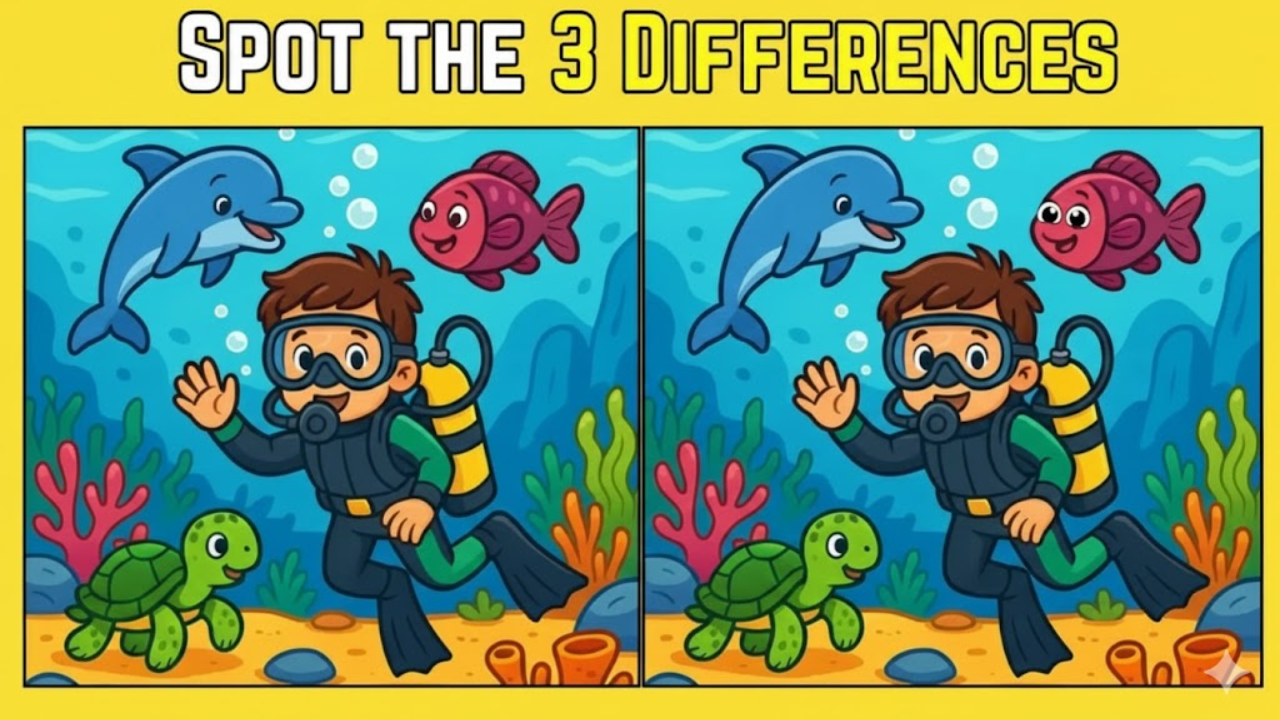
Think you have sharp eyes and fast reflexes? This 8-second IQ visual challenge is designed to test exactly that. At first glance, the two scuba diving images look almost identical—but hidden within them are three subtle differences. Your mission is simple: find all three before the 8 seconds run out.
“Spot the Difference” puzzles are more than just casual games. They activate critical areas of the brain responsible for focus, pattern recognition, and visual processing. Let’s explore why this puzzle is trickier than it seems, how it benefits your brain, and where the hidden differences are located.

Why “Spot the Difference” Puzzles Are So Addictive
These puzzles are popular because they strike the perfect balance between simplicity and challenge. Your brain instantly recognizes the images as similar, but identifying what’s different requires deep concentration and quick comparison.
As you scan the images, your visual cortex works overtime—analyzing shapes, colors, and object placement. This makes spot-the-difference challenges both entertaining and mentally rewarding.
Why This Scuba Diving Puzzle Is Harder Than It Looks
The difficulty lies in subtle visual manipulation. Instead of obvious changes, this puzzle hides differences in small details that blend naturally into the underwater scene.
Common trick areas include:
- Minor object alterations
- Small color changes
- Slight missing or reshaped elements
With only 8 seconds, your brain must process information rapidly without overthinking—making this an excellent test of attention under pressure.
Brain Benefits of Spot-the-Difference Challenges
Solving puzzles like this regularly can improve several cognitive skills:
1. Attention to Detail
Your brain learns to detect even the smallest inconsistencies.
2. Focus & Concentration
Time pressure strengthens your ability to concentrate without distraction.
3. Visual Perception
Repeated exposure enhances pattern recognition and visual accuracy.
4. Problem-Solving Ability
Quick comparison and decision-making boost mental flexibility.
How to Spot the Differences Faster
Want to improve your speed next time? Try these expert tips:
- Scan systematically (top to bottom or left to right)
- Check faces, objects, and accessories first
- Look for color and shape changes
- Use peripheral vision, not tunnel vision
- Practice regularly—your brain adapts fast
Solution: The 3 Differences in the Scuba Diving Scene
Still searching? Here are the three hidden differences revealed:
- Fish’s Eye
The fish’s eye changes shape and size between the two images. - Diver’s Oxygen Tank
A small design detail on the oxygen tank disappears in one image. - Boy’s Belt Color
The belt changes color—from yellow to a different shade—between images.
These differences are intentionally subtle, making them easy to miss under time pressure.
Do These Puzzles Actually Improve Your IQ?
While they don’t change IQ scores directly, visual puzzles significantly improve cognitive sharpness, reaction time, and mental alertness. Over time, they help you process visual information faster and with greater accuracy—skills that transfer to real-life tasks.
How Often Should You Practice?
Even 5 minutes a day can make a noticeable difference. Regular practice strengthens observation skills and keeps your brain agile, much like exercise does for your body.
Final Thoughts
This 8-second scuba diving spot-the-difference challenge proves that small visual details can push your brain to its limits. Whether you solved it instantly or needed extra time, every attempt trains your mind to be faster and sharper. Ready for the next challenge?