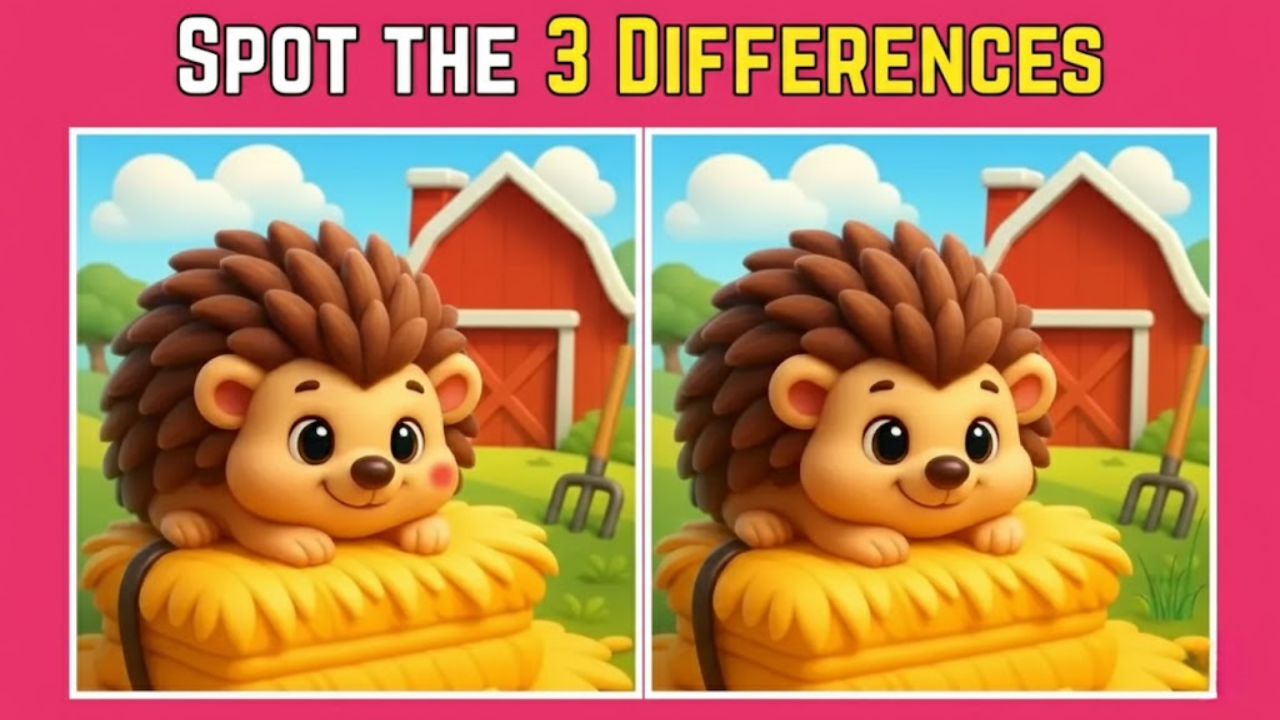
Think your eyes are sharper than most? It’s time to put your visual skills to the test with this fun optical illusion challenge. You’ll see two nearly identical hedgehog images, and your task is simple—but not easy. Hidden within these pictures are three subtle differences, and you have only 10 seconds to spot them all.
At first glance, the images appear exactly the same. But don’t be fooled—small details have been cleverly altered to trick your brain. This challenge is designed to test your attention to detail, speed, and focus. Are you ready to race against the clock?
What Is a “Spot the Difference” Optical Illusion?
A “Spot the Difference” puzzle presents two similar images side by side and asks viewers to identify the changes between them. These differences can be extremely subtle—such as a missing object, a change in shape, or a small alteration in color.
Adding a strict time limit, like 10 seconds, significantly increases the difficulty. It forces your brain to process visual information quickly, making this type of puzzle both entertaining and mentally stimulating. That’s why these challenges are commonly found in puzzle books, mobile apps, and online brain-training games.
In this hedgehog challenge, statistics suggest that only 5 out of 10 people manage to find all three differences within the given time.
How the Hedgehog Challenge Works
You are shown two images featuring a hedgehog scene. While they look almost identical, three details are different.
Your goal:
- Compare both images simultaneously
- Detect the differences as fast as possible
- Finish within 10 seconds
The differences may involve:
- Small changes in objects
- Minor alterations in shapes or markings
- Missing or added background elements
Because the changes are subtle, this challenge tests not just eyesight, but also visual memory and rapid comparison skills.
Why This Puzzle Feels Harder Than It Looks
On the surface, finding three differences sounds easy. However, the difficulty lies in how the human brain processes images.
1. Brain Prioritizes Big Details
Your mind naturally focuses on the most noticeable elements, often ignoring small changes that are hidden in plain sight.
2. Subtle Modifications
The differences are intentionally minor—tiny marks, shape adjustments, or background changes—which makes them harder to detect quickly.
3. Time Pressure
With just 10 seconds available, there’s little room for hesitation. The ticking clock increases stress, which can cause you to overlook details you might otherwise notice.
Tips to Spot All 3 Differences in 10 Seconds
If you want to improve your success rate, try these proven strategies:
Scan the Outer Areas First
Differences are often hidden near the edges rather than the center. Start by checking borders, corners, and background elements.
Look for Missing or Added Objects
Pay attention to anything that appears in one image but not the other—such as grass, marks, or small objects.
Divide the Image Into Sections
Mentally split the image into top, middle, and bottom sections. Compare each area quickly before moving on.
Trust Your First Instinct
If something looks different, don’t overthink it. Mark it mentally and move forward—speed matters more than perfection.
The 3 Hidden Differences Revealed
If you couldn’t find all three in time, here’s what was changed:
1. Barn Window Detail
In one image, the barn window appears as a cross-shaped design. In the other, it changes to a plain circular window.
2. Hedgehog’s Cheek Mark
One version of the image shows an extra mark on the hedgehog’s left cheek, while the other image does not.
3. Grass Near the Haystack
A small patch of grass appears in front of the haystack in one image but is missing in the other.
Once you notice these differences, the images suddenly look much less alike—but spotting them quickly is the real challenge.
Why Optical Illusion Puzzles Are So Enjoyable
These challenges are popular because they combine fun and mental fitness in a simple format.
Key Benefits
- Improves observation skills
- Enhances focus and concentration
- Strengthens pattern recognition
- Boosts reaction time
- Provides stress relief through engaging distraction
The competitive element—especially knowing that only half of participants succeed—makes the experience even more exciting.
Perfect for Sharing and Group Fun
“Spot the Difference” puzzles are highly shareable. You can:
- Post them on social media and challenge friends
- Use them in classrooms for cognitive exercises
- Include them in team-building activities
- Enjoy them with family as a fun brain game
The short time limit adds urgency and encourages repeat attempts.
How to Keep Improving Your Visual Skills
Want to get better at these challenges? Try the following:
- Practice similar puzzles regularly
- Reduce the time limit gradually
- Try other brain games like memory tests or logic puzzles
- Stay relaxed—stress reduces accuracy
With practice, your brain becomes faster at detecting inconsistencies and processing visual information.
Final Thoughts
The hedgehog optical illusion challenge is a fun and effective way to test how quickly you can spot subtle differences under pressure. Whether you succeeded or not, each attempt helps sharpen your visual perception and mental agility.
Think you can do better next time? Keep challenging yourself—your brain loves the workout!
👀 Ready for another optical illusion? Stay alert—your next challenge is waiting.