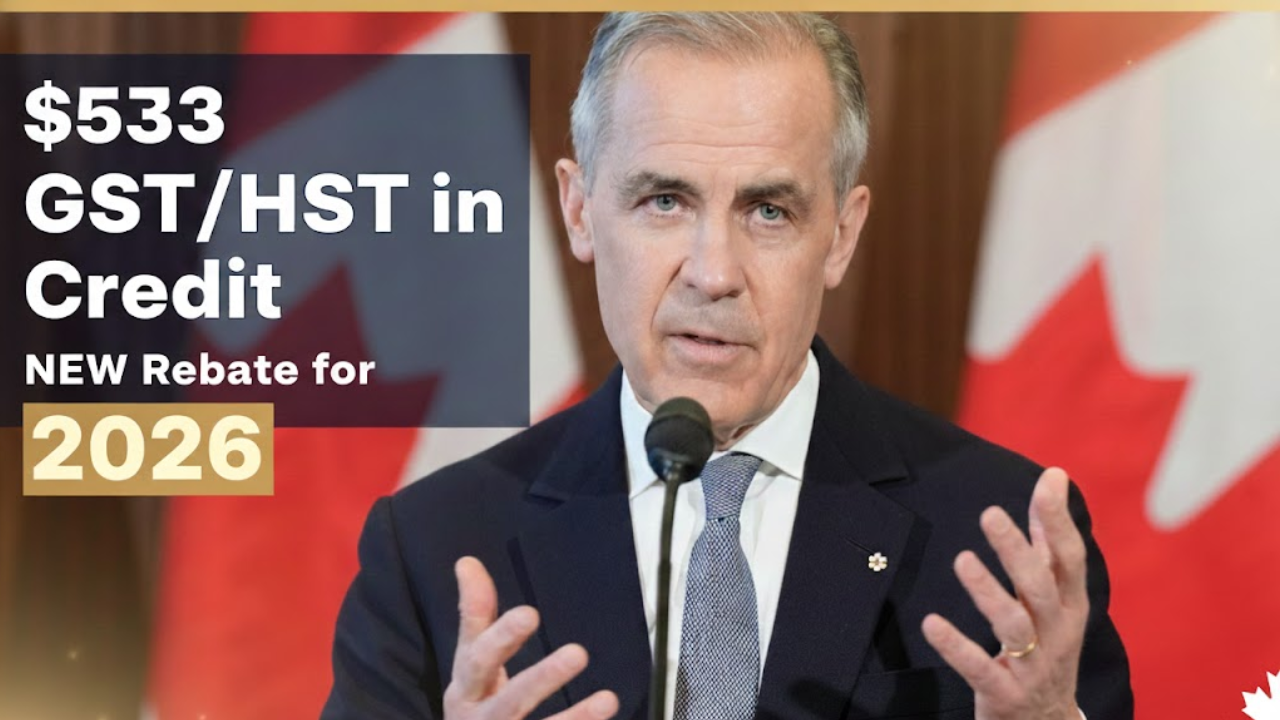
The GST/HST Rebate 2026 is an important federal benefit designed to help Canadians manage rising living costs. As inflation continues to affect essentials such as groceries, housing, utilities, and transportation, the Canadian government has updated the Goods and Services Tax (GST) / Harmonized Sales Tax (HST) rebate for 2026 to better support low- and moderate-income households.
Administered by the Canada Revenue Agency (CRA), this rebate reduces the overall tax burden by returning a portion of the GST or HST paid throughout the year. Understanding the eligibility criteria, income thresholds, rebate amounts, and payout dates for 2026 can help Canadians plan their finances more effectively.
This article explains everything you need to know about Canada’s new GST/HST rebate for 2026, in a clear, practical, and SEO-friendly format.
What Is the GST/HST Rebate?
The GST/HST rebate is a tax-free federal payment provided to eligible Canadians to offset the consumption taxes they pay on everyday goods and services. It is not a loan and does not need to be repaid.
Key Features of the GST/HST Rebate
- Tax-free benefit
- Paid quarterly (or annually, if selected)
- No separate application for most Canadians
- Eligibility is based on income, family size, and marital status
- Calculated automatically when you file your income tax return
For 2026, the rebate continues to play a crucial role in supporting household budgets, particularly for families, seniors, students, and individuals on fixed incomes.
Who Is Eligible for the GST/HST Rebate in 2026?
Eligibility for the GST/HST rebate 2026 is largely consistent with previous years, with adjustments reflecting economic conditions and inflation.
To qualify, you must generally meet the following conditions:
- Be a Canadian resident for tax purposes
- Be 19 years of age or older, or:
- Have a spouse or common-law partner, or
- Be a parent living with a child under 19
- Have filed your annual income tax return
- Earn income below the CRA’s 2026 income thresholds
Special Groups
- Seniors receiving the Guaranteed Income Supplement (GIS) are often automatically eligible
- Students and temporary residents may qualify if they meet residency and income rules
- Couples are assessed based on combined family income
GST/HST Rebate Income Thresholds for 2026
For 2026, income thresholds have been adjusted upward to account for inflation and rising costs of living.
Estimated Income Limits (Approximate)
| Household Type | Estimated Income Threshold |
|---|---|
| Single individual | Under CAD 50,000 |
| Couple (no children) | Up to CAD 60,000 |
| Family with children | Up to CAD 68,000 or more |
The rebate is gradually phased out as income rises above these levels, ensuring support is targeted to Canadians who need it most.
How Much Can You Receive in 2026?
The GST/HST rebate amount for 2026 depends on income, marital status, and the number of children under 19.
Estimated Annual GST/HST Rebate Amounts
| Household Type | Estimated Annual Rebate |
|---|---|
| Single individual | Up to CAD 490 |
| Couple (no children) | Around CAD 640 |
| Family with children | Up to CAD 1,050 |
| Additional amount | Paid per child under 19 |
These figures are estimates. The CRA calculates the exact amount based on your most recent tax assessment.
GST/HST Rebate Payout Schedule for 2026
Most eligible Canadians will receive the rebate quarterly, helping spread financial support throughout the year.
2026 GST/HST Rebate Payment Dates
| Payment Month | Expected Distribution |
|---|---|
| January 2026 | First payment |
| April 2026 | Second payment |
| July 2026 | Third payment |
| October 2026 | Fourth payment |
Alternatively, some Canadians may choose to receive the rebate as a lump-sum payment after filing their tax return, depending on CRA options and personal preference.
Payments are issued via direct deposit or cheque, based on your CRA account settings.
How to Apply for the GST/HST Rebate
For most Canadians, no separate application is required.
Standard Process
- File your annual income tax return
- CRA automatically determines eligibility
- Payments are issued according to the schedule
Who May Need to Apply Separately?
- New residents of Canada
- Individuals who recently turned 19
- Those with changes in marital status or dependents
In such cases, Form RC151 may be required to ensure you receive the rebate.
Tips to Maximize Your GST/HST Rebate in 2026
- File your taxes early to avoid payment delays
- Report dependents accurately to receive the correct amount
- Update your address and marital status with the CRA
- Sign up for direct deposit for faster payments
- Monitor income changes, as they affect future rebate amounts
Common Questions About the 2026 GST/HST Rebate
- Is the GST/HST rebate taxable?
No. It is completely tax-free. - Can students receive the rebate?
Yes, if they meet income and residency requirements. - What if my income changes during the year?
Adjustments are made in the next benefit year based on your tax return. - Do seniors automatically receive the rebate?
Many seniors do, especially those receiving GIS, but filing taxes is still essential. - Can I choose quarterly or annual payments?
In some cases, yes—depending on CRA options for the benefit year.
Summary: Canada’s GST/HST Rebate 2026
The GST/HST rebate for 2026 remains a vital source of financial support for Canadians with low to moderate incomes. By understanding eligibility rules, income thresholds, rebate amounts, and payout dates, households can better manage their budgets and reduce the impact of consumption taxes.
Filing your taxes accurately and on time—and keeping your CRA information updated—is the best way to ensure you receive your GST/HST rebate payments without delay.