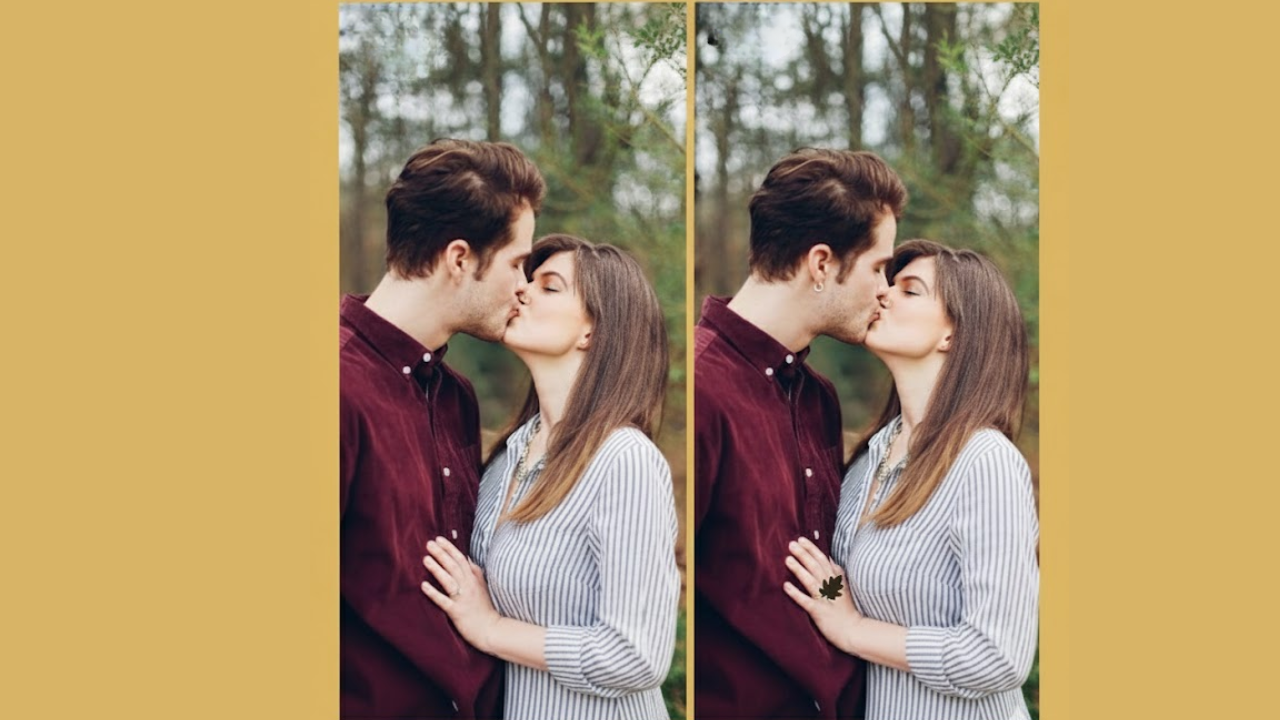
Visual puzzles have taken the internet by storm—and for good reason. They’re fun, challenging, and surprisingly effective at sharpening your brain. This “Spot the 3 Differences” challenge looks simple at first glance, but don’t be fooled. The two images of a couple sharing a romantic moment appear nearly identical, yet three subtle differences are cleverly hidden.
Your challenge? Find all three differences as quickly as possible. Ready to test your observation skills?
Why “Spot the Difference” Puzzles Are So Popular
“Spot the Difference” puzzles are more than just casual entertainment. They engage multiple areas of the brain at once, especially those responsible for attention, visual perception, and pattern recognition.
What makes them addictive is the balance between familiarity and challenge. Your brain instantly recognizes the images as the same, but the moment you start searching for inconsistencies, your focus intensifies. That mental effort is exactly what makes these puzzles both fun and beneficial.
About This Visual Challenge
In this puzzle, you’re presented with two side-by-side images of a couple standing outdoors, sharing a kiss. The background, lighting, posture, and expressions are almost identical, making the differences difficult to spot at first.
The trick lies in noticing tiny visual changes—details that your eyes may initially overlook because your brain assumes both images are the same.
Why This Puzzle Is Trickier Than It Looks
The difficulty doesn’t come from complexity, but from subtlety. The differences are intentionally placed in areas where your eyes naturally relax, such as accessories, small objects, or minor visual elements.
Common reasons people miss the differences include:
- Looking at the image as a whole instead of scanning sections
- Focusing only on faces and ignoring hands or accessories
- Assuming small objects are unchanged
This makes the puzzle an excellent test of fine attention to detail.
The Cognitive Benefits of Solving These Puzzles
Regularly solving visual puzzles like this one can offer real mental benefits:
1. Improves Attention to Detail
Your brain learns to slow down and notice what others miss.
2. Enhances Focus and Concentration
Searching for differences trains sustained attention, especially useful in daily tasks.
3. Boosts Visual Processing Speed
The more you practice, the faster your brain becomes at comparing images.
4. Strengthens Memory and Pattern Recognition
You subconsciously remember shapes, colors, and placements, improving recall.
Tips to Spot Differences Faster
If you’re struggling, try these expert strategies:
- Scan methodically: Move left to right, top to bottom
- Focus on accessories and hands: Rings, jewelry, or objects often change
- Compare one section at a time instead of jumping around
- Don’t rush—speed improves naturally with practice
Solution: The 3 Differences Explained
If you’ve already tried and want to check your answers, here are the three differences hidden in the images:
- Ring on the Woman’s Hand
In one image, the ring on her hand is clearly visible, while in the other, it’s missing or altered. - Small Leaf/Object on the Hand
A small dark leaf-like shape appears on the woman’s hand in one image but not the other. - Subtle Change in Hand Detail
A minor visual alteration around the hand area (such as shape, object presence, or detail clarity) creates the third difference.
These changes are intentionally small, making them easy to miss unless you’re carefully observing.
Why Your Brain Loves Challenges Like This
Your brain thrives on novelty and problem-solving. Visual challenges like “Spot the Difference” activate reward systems when you find the solution, releasing dopamine—the same chemical linked to motivation and learning.
That’s why these puzzles feel satisfying and why people often look for the next one immediately after solving one.
How Often Should You Try These Puzzles?
Even 5–10 minutes a day can make a noticeable difference in focus and visual sharpness. Think of it as a quick mental workout—no equipment required.
Final Thoughts
This romantic “Spot the 3 Differences” puzzle proves that even the most familiar images can hide clever surprises. Whether you spotted all the changes instantly or needed a second look, every attempt strengthens your observation skills.
If you enjoyed this challenge, keep testing your eyes—because the smallest details often make the biggest difference.