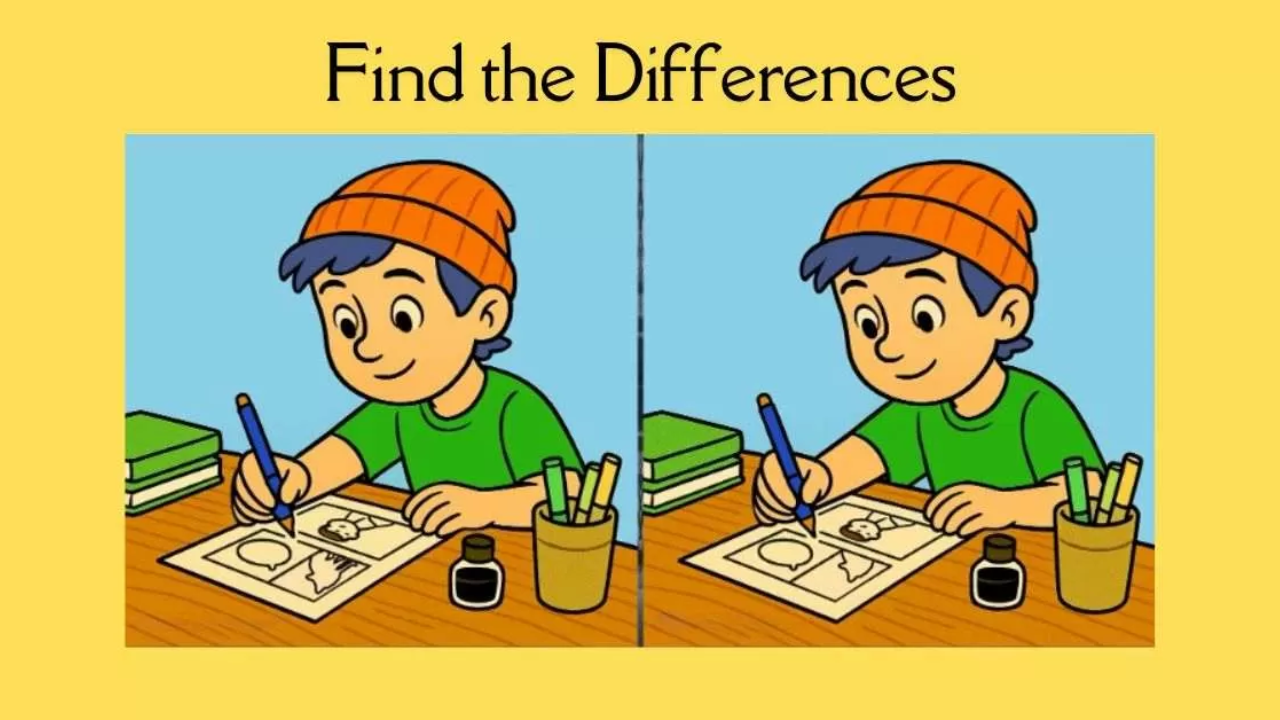

“Spot the 3 Differences” puzzles are classic visual brain games that test how closely we observe the world around us. In the image above, two nearly identical illustrations show a young boy wearing a cap, happily drawing pictures at a study desk. At first glance, both images appear exactly the same—but hidden within them are three subtle differences that challenge your attention to detail.
These puzzles are especially popular among children, but adults enjoy them just as much. They combine fun, learning, and mental stimulation in a simple yet powerful way. In this article, we’ll take a deep dive into this Spot the 3 Differences puzzle, explain how to approach it, and explore the benefits of playing such visual games regularly.
What Is a Spot the 3 Differences Puzzle?
A Spot the Differences puzzle presents two similar images placed side by side. Your task is to carefully compare them and identify a specific number of changes—in this case, three.
The differences may include:
- A missing or added object
- A change in color or shape
- A small alteration in facial expression
- Differences in background items
- Slight changes in object position
These puzzles rely on visual perception, patience, and concentration, making them both entertaining and educational.
Understanding the Image Scene
What’s Happening in the Picture?
The image shows:
- A smiling boy wearing an orange cap
- He is sitting at a desk and drawing on paper
- A pencil holder with colored pencils
- A stack of books on the table
- An ink bottle placed nearby
The warm colors and friendly cartoon style make the puzzle visually appealing, especially for kids. Because the scene is detailed but not cluttered, it’s perfect for hiding small differences that are easy to miss.
How to Spot the 3 Differences in This Image
To solve this puzzle effectively, follow a step-by-step observation strategy.
1. Focus on the Character First
Start by closely examining the boy:
- Facial expression (smile, eyes, mouth shape)
- Cap shape and color
- Hand position while drawing
Even a tiny change in expression or clothing detail can count as a difference.
2. Check the Drawing Paper
The paper the boy is drawing on is a common place for hidden differences:
- Compare the drawings carefully
- Look for missing or altered shapes
- Check the number or placement of sketches
Small changes on paper are often used to trick the eye.
3. Examine Desk Objects
Now move to the surrounding objects:
- Pencil holder and number of pencils
- Ink bottle shape or position
- Stack of books (number, color, alignment)
These background items often hide one of the trickiest differences.
4. Scan the Image Systematically
Instead of jumping randomly:
- Compare top to bottom
- Then left to right
- Match one section at a time
A systematic scan greatly increases accuracy.
Why Spot the Differences Puzzles Are Beneficial
These puzzles are not just for fun—they are excellent brain exercises.
Key Benefits
- Improves concentration and attention span
- Enhances visual discrimination skills
- Develops problem-solving ability
- Supports early learning in children
- Helps adults relax and refresh the mind
For children, these puzzles support cognitive development. For adults, they act as a quick mental workout.
Educational Value for Kids
Parents and teachers often use Spot the Differences puzzles because they:
- Encourage independent thinking
- Improve focus without pressure
- Make learning enjoyable
- Strengthen observation and memory skills
They’re commonly found in activity books, worksheets, and educational apps.
Tips to Find Differences Faster
If you’re struggling, try these expert tips:
- Look for what’s missing, not just what’s different
- Compare colors carefully
- Take short breaks and recheck
- Change your viewing distance
- Stay patient—details reveal themselves slowly
Sometimes, the final difference appears only after you relax your eyes.
Who Can Enjoy This Puzzle?
One of the best things about Spot the Differences puzzles is that anyone can play:
- Kids and students
- Parents and families
- Teachers and educators
- Puzzle lovers
- Adults looking for a brain refresh
The difficulty can be adjusted simply by changing the image complexity.
Conclusion
The Spot the 3 Differences puzzle shown above proves that even a simple cartoon scene can hide clever visual challenges. By carefully observing the boy, his drawing, and the surrounding objects, players can sharpen their attention to detail while having fun. Whether you’re solving it alone, using it as a learning tool for children, or publishing it on a puzzle blog, this type of visual game offers the perfect balance of entertainment and mental exercise.