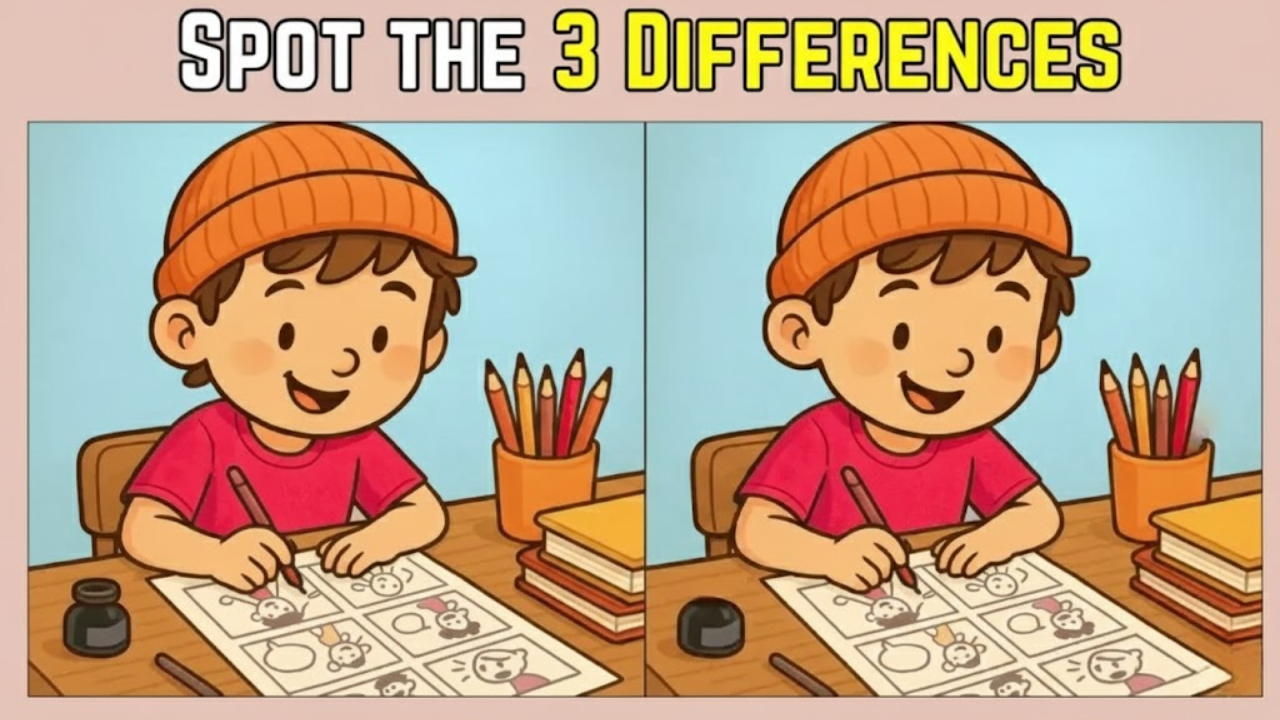
Are you confident in your observation skills? This classic “Spot the Difference” visual puzzle challenges your attention to detail and mental speed. At first glance, the two images of a boy drawing look identical—but hidden within them are three subtle differences. The twist? You only have 7 seconds to find them.
These puzzles aren’t just entertaining. They actively train your brain, improve focus, and sharpen visual perception. Let’s explore why this challenge is trickier than it looks, how it benefits your mind, and—if you’re stuck—where the differences are hiding.
Why “Spot the Difference” Puzzles Are So Addictive
The appeal of spot-the-difference puzzles lies in their simplicity and satisfaction. The task is easy to understand, yet difficult to master. Your brain must scan, compare, and process visual details rapidly, all under time pressure.
As you search for differences, your brain’s visual processing system is fully engaged. This helps strengthen concentration, pattern recognition, and short-term visual memory—skills that are useful far beyond puzzles.
What Makes This Puzzle Especially Challenging
What raises the difficulty level here is subtlety. The differences are not obvious or exaggerated. Instead, they blend naturally into the image, forcing you to carefully inspect small details.
In this puzzle, changes involve:
- Minor alterations to the boy’s appearance
- Small object variations
- Slight missing elements in the background
Add the 7-second time limit, and your brain must work quickly and efficiently, without the luxury of slow comparison.
How These Puzzles Benefit Your Brain
Regularly solving visual puzzles like this offers real cognitive advantages:
1. Sharper Attention to Detail
Your brain becomes better at noticing small changes and inconsistencies.
2. Improved Visual Perception
You learn to process images more accurately and efficiently.
3. Better Focus Under Pressure
Time-limited challenges train your mind to stay alert and decisive.
4. Enhanced Cognitive Agility
Quick comparison and decision-making strengthen overall mental flexibility.
Solution: The 3 Differences in the Boy Drawing Image
If you’re ready for the answer, here are the three differences hidden in the images:
- The Boy’s Hair
In one image, a small section of hair near the boy’s ear is missing—a very easy detail to overlook. - The Ink Bottle
The shape or label of the ink bottle changes slightly between the two images. - The Pencil Holder
One pencil disappears from the holder in the second image, altering the object count.
These differences are deliberately subtle, which is why many viewers miss one or more on their first attempt.
Tips to Spot Differences Faster
Want to improve your speed next time? Try these strategies:
- Scan systematically, not randomly—move left to right or top to bottom
- Focus on objects, not just faces
- Check edges and corners, where changes are often hidden
- Practice regularly, as repetition sharpens visual instincts
More Than Just a Puzzle
“Spot the Difference” challenges are more than casual games. They’re effective brain exercises that complement other mental activities like riddles, memory games, and logic puzzles. Combined with regular physical activity, they help keep your mind sharp at any age.
Final Thoughts
This boy drawing spot-the-difference puzzle proves that even simple images can challenge your brain in powerful ways. Whether you solved it in seconds or needed a closer look, each attempt strengthens your observation skills. Keep testing your vision—you might be surprised how quickly your brain improves.