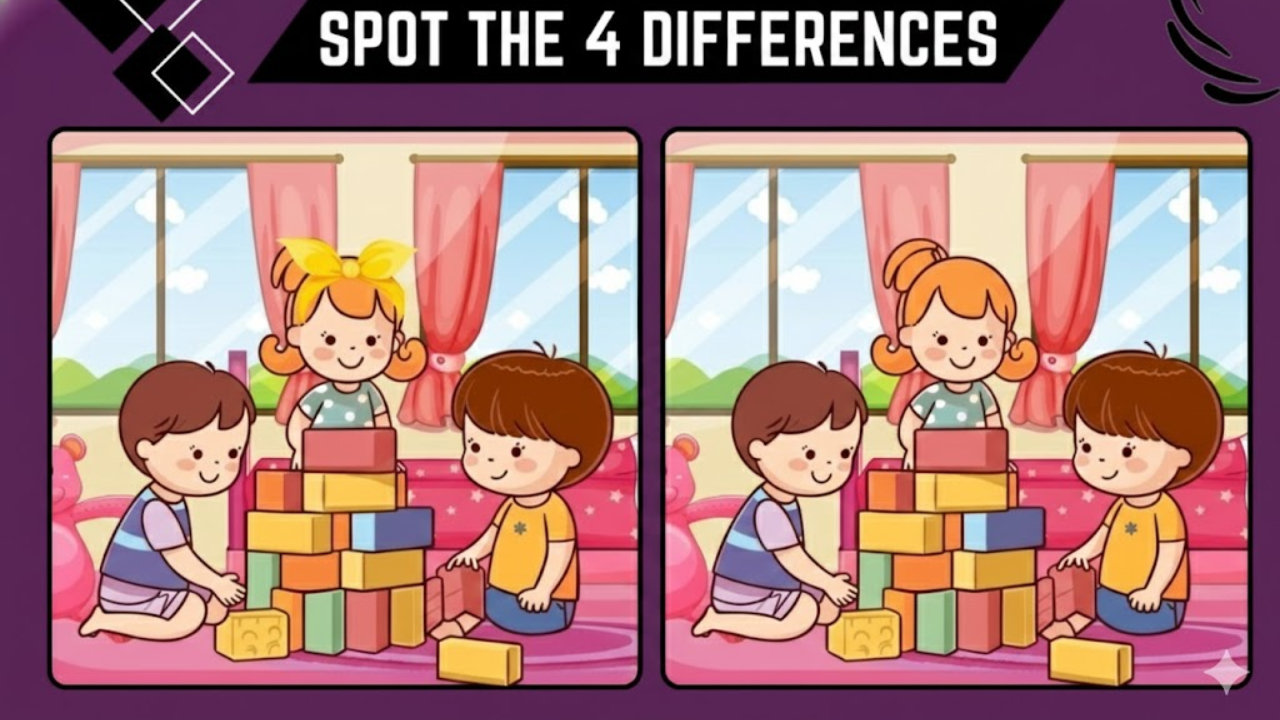
“Spot the Differences” puzzles are timeless brain games enjoyed by children and adults alike. They challenge your ability to observe, compare, and focus on small visual details. In the image above, we see two side-by-side cartoon illustrations of children playing with colorful building blocks inside a room. At first glance, both pictures appear identical—but a closer look reveals subtle differences hidden in plain sight.
This type of puzzle is designed to test patience, attention, and visual memory. In this detailed article, we’ll explain how to approach a Spot the 3 Differences puzzle, analyze the image logically, and explore why such puzzles are excellent for mental development—especially for kids.
What Is a “Spot the Differences” Puzzle?
A Spot the Differences puzzle presents two nearly identical images placed next to each other. The goal is to carefully compare both images and identify a specific number of changes—commonly 3, 4, or 5 differences.
These differences may include:
- Changes in facial expressions
- Missing or extra objects
- Color variations
- Shape or size changes
- Altered background details
The challenge lies in noticing small visual mismatches that are easy to overlook.
Understanding the Given Image
Scene Description
The image shows:
- Three children sitting on the floor
- Colorful blocks stacked in the center
- A bright room with windows, curtains, and outdoor scenery
- A playful, cheerful cartoon style
Both images look almost the same, which is exactly what makes the puzzle engaging. The differences are intentionally subtle so that the brain must slow down and analyze every detail carefully.
How to Solve This Spot the Differences Puzzle
To successfully find the differences, follow a step-by-step observation strategy.
1. Observe the Characters Carefully
Start with the children:
- Check facial expressions (smiles, eyes, mouth shape)
- Look at hair accessories, bows, or headbands
- Compare clothing colors, patterns, or symbols
Even a tiny change in expression or clothing detail can count as a difference.
2. Compare the Blocks
The blocks are central to the image and often contain hidden changes:
- Missing or added blocks
- Different colors or patterns
- Changes in block position or shape
Block puzzles are commonly used to distract the eye, making this area especially important to scan closely.
3. Scan the Background
Background details often hide the trickiest differences:
- Curtains or window shapes
- Outdoor scenery (clouds, sky, trees)
- Furniture or wall elements
A slight change in color, shape, or object placement can be one of the hidden differences.
4. Divide the Image Into Sections
Mentally divide both images into:
- Top section
- Middle section
- Bottom section
Compare each section slowly and systematically instead of jumping around randomly.
Why These Puzzles Are Great for Kids
Spot the Differences puzzles are more than just fun—they are educational brain exercises.
Key Benefits for Children
- Improves concentration and focus
- Strengthens visual discrimination skills
- Enhances attention to color, shape, and detail
- Encourages logical thinking
- Makes learning fun and stress-free
That’s why teachers, parents, and activity-book creators frequently include such puzzles in learning materials.
Benefits for Adults Too
Adults also benefit from these puzzles:
- Helps relax the mind
- Improves observation and memory
- Acts as a quick mental refresh
- Reduces screen fatigue when used as a casual brain game
They’re perfect for short breaks during work or leisure time.
Tips to Find Differences Faster
If you’re stuck, try these expert tips:
- Look for what’s missing, not just what’s different
- Compare colors before shapes
- Change your viewing distance
- Blink or look away briefly, then recheck
- Stay patient—rushing hides details
Often, the final difference appears only after slowing down.
Educational & Entertainment Value
Because they combine fun with thinking, Spot the Differences puzzles are widely used in:
- Children’s activity books
- School worksheets
- Puzzle blogs and websites
- Mobile apps and games
- Social media engagement posts
They appeal to all ages and require no special skills—just observation.
Conclusion
The Spot the 3 Differences puzzle shown above is a perfect example of how simple illustrations can create engaging mental challenges. With cheerful characters, bright colors, and cleverly hidden details, this puzzle encourages careful observation and patience. Whether you’re solving it for fun, using it as a learning activity for kids, or adding it to a puzzle blog, such visual games prove that small details can make a big difference.